

Multi-enzyme cleaners harness the power of biological enzymes—specialised molecules that accelerate chemical reactions—to target and break down contaminants with precision, following a lock-and-key model where each enzyme fits a specific type of residue.
When sprayed onto a surface, these cleaners introduce beneficial bacteria that rapidly multiply and begin producing enzymes. These enzymes initiate the breakdown of organic matter, making cleaning both faster and more thorough.
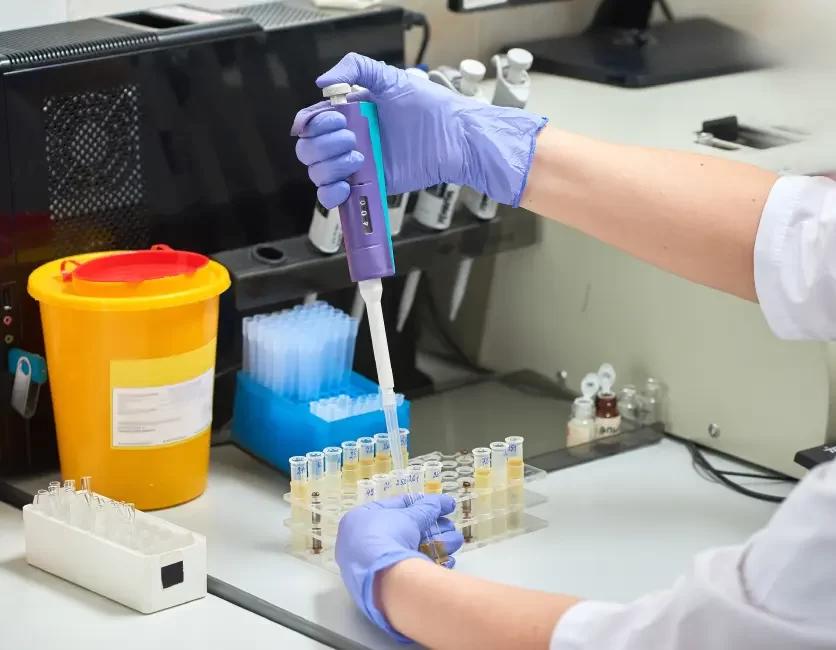
Image Credit : Shutterstock / al7
Thanks to their enzymatic action, these formulas outperform many traditional chemical cleaners. They provide rapid material degradation, are biodegradable, pH-neutral, and non-corrosive—making them ideal for HVAC and indoor environmental cleaning. Let’s explore how these powerful agents work and why they are the go-to solution for professional HVAC Hygiene companies like Clean-Air.
Benefits of Enzyme Cleaners
Enzymes are proteins composed of amino acid chains that function as catalysts. Through a “lock-and-key” mechanism, they break down organic substances—such as grease, stains, and odours—into smaller, manageable molecules that bacteria can then consume and digest. [1]
Key Advantages:
- Effective Stain Removal: Enzymes target and dismantle tough, organic-based stains that resist conventional cleaning methods.
- Odour Elimination: By breaking down the source of odours, enzyme cleaners neutralise unpleasant smells at their root.
- Eco-Friendly: Enzyme cleaners utilise natural, biodegradable processes, producing harmless byproducts like water and carbon dioxide.
- Safer: Free from harsh chemicals, these cleaners are safe to use in homes and sensitive environments.
How Enzyme Cleaners Work
Enzyme-based cleaning products provide a five-step biological approach to breaking down organic matter:
- Enzymes as Catalysts
Enzymes accelerate chemical reactions without being consumed or altered during the process. - Targeted Action
Specific enzymes are designed to target proteins, fats, and carbohydrates—the main constituents of organic debris and stains. - Beneficial Bacteria
Many enzyme cleaners include bacteria that consume the smaller organic molecules created by enzymatic breakdown. - Digestion Process
The bacteria digest these remnants, converting them into harmless byproducts like CO₂ and water. - Complete Odour and Stain Elimination
By removing the root causes, enzyme cleaners provide long-lasting cleanliness and odour control.
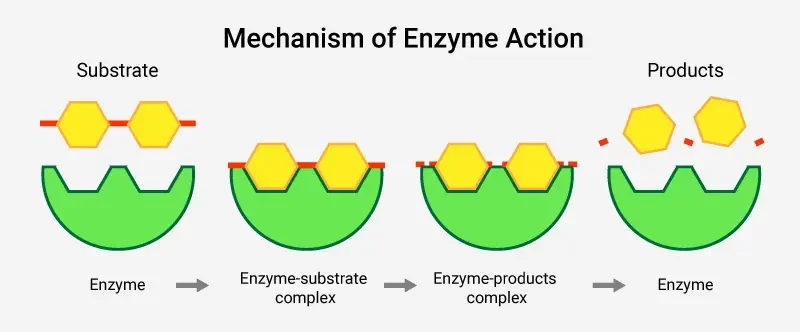
The Lock-and-Key Model: How Enzymes Function
Enzyme-substrate interaction is often explained by the lock-and-key model. Each enzyme contains an active site—the "lock"—shaped to fit a specific substrate—the "key." This model ensures that each enzyme acts only on particular types of organic matter, enhancing both precision and efficiency. [2]
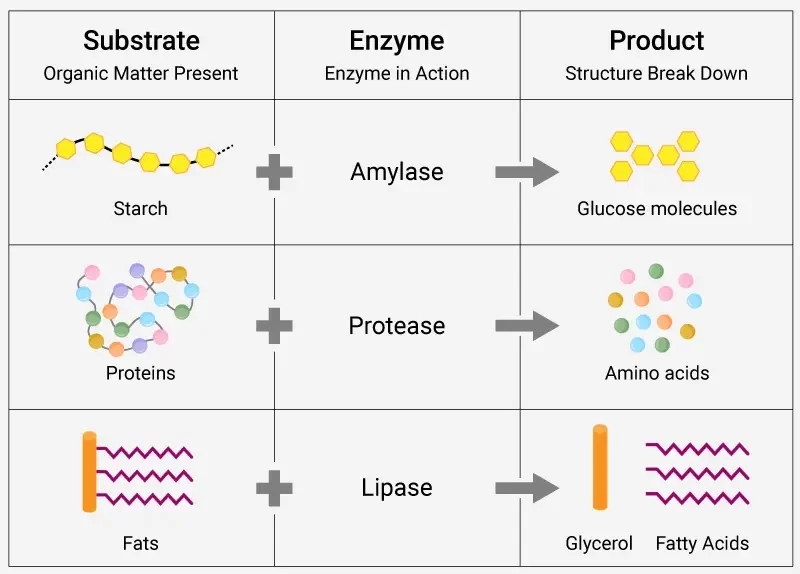
This specificity is crucial in multi-enzyme cleaners, where various enzymes work in tandem to break down different types of contaminants, such as proteins, starches, and fats.

Common Enzymes and Their Roles
| Enzyme | Target Substance | Application Example |
|---|---|---|
| Amylases | Starches | Food and Drink Stains |
| Lipases | Fats and Oils | Grease, oily residues |
| Cellulases | Cellulose (soil, dust) | Organic debris from soil and plant matter |
| Proteases | Proteins (urine, blood) | Bodily fluids, food stains |
| Mannanases | Plant-based polysaccharides | Organic residue in HVAC biofilms and dirt layers |

Enzyme Chemistry in HVAC Coil Cleaners
The enzyme-based coil cleaner we use has a combination of enzymes and beneficial bacteria to tackle organic contaminants commonly found in HVAC systems. When sprayed onto a coil surface, the bacterial culture quickly multiplies and secretes enzymes that break down biofilm, mould, and other biological build-ups.
Typical Formula Components:
- Detergents (for surface tension reduction)
- Proteases
- Amylases
- Lipases
- Cellulases
- Mannanases
A synergistic blend offers a broader and more powerful cleaning spectrum than single-enzyme products.

Image Credit : Shutterstock / IBRAHIMOZKADIR
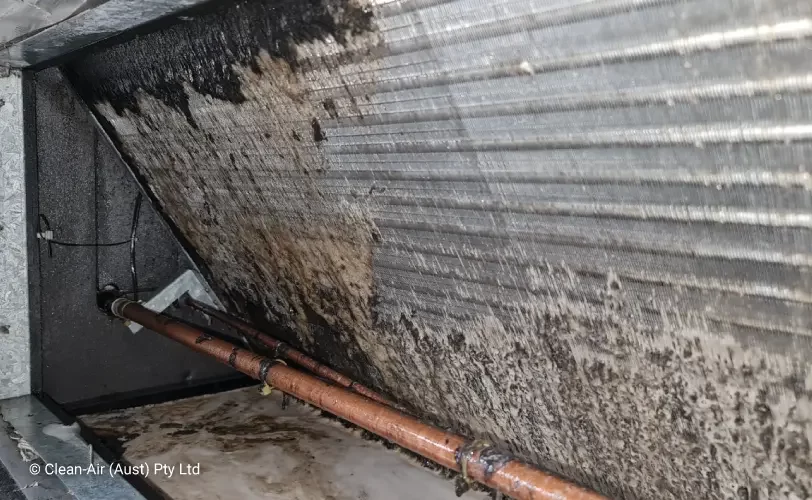
Pre Cleaning
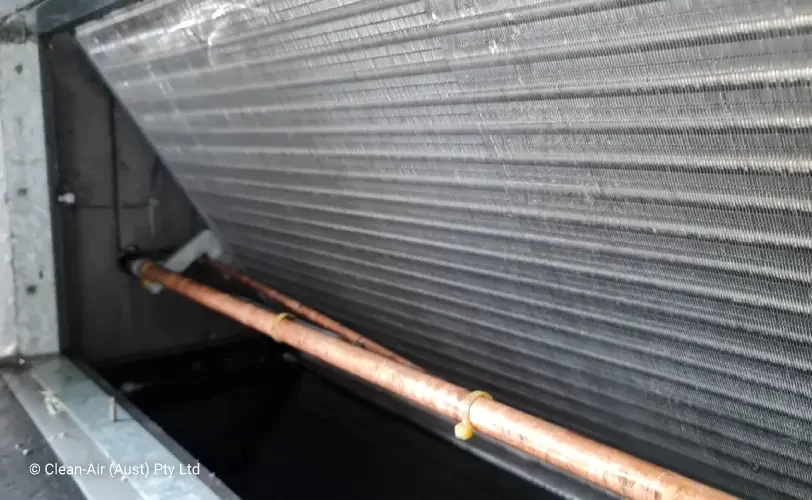
Post Cleaning
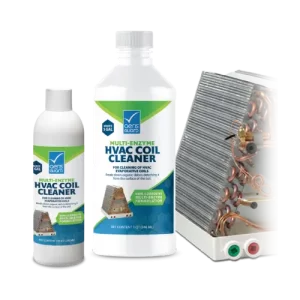
AerisGuard™ Multi-Enzyme Coil Cleaner [3]
- Non-corrosive, compatible with all metal surfaces
- Suitable for domestic, commercial & industrial air installations
- Compatible with all common cleaning processes
- Odour free, easy to use
- Biodegradable
Pure Enzyme Functions
- Protease
Function: Breaks peptide bonds in proteins. These can be derived from plants, microbes, or animals and are used across acidic to alkaline environments. - Lipase
Function: Targets and deconstructs fats. Often included in laundry and surface cleaners for grease and oil removal. - Endocellulase
Function: Assists in removing stains from grass, blood, fat, and similar substances through cellulose degradation. - Alpha-Amylase
Function: Breaks down starch into smaller sugars. Commonly used in both laundry and dishwashing detergents.
These enzymes act repeatedly without being consumed, making them both efficient and cost-effective.
Enzymes + Probiotics: A Synergistic Solution
Why Combine Them?
Using enzymes and probiotics together creates a powerful and long-lasting cleaning effect:
- Enzymes begin the process by breaking down complex organic matter.
- Probiotics (beneficial microbes, typically Bacillus species) feed on the resulting smaller molecules, such as amino acids, fatty acids, and sugars.
How It Works:
| Phase | Action |
|---|---|
| Enzymatic | Enzymes catalyse the breakdown of complex materials |
| Microbial | Probiotics consume the breakdown products, continuing the cleaning |
| Long-Term Impact | Beneficial microbes remain active, inhibiting pathogen regrowth and re-soiling |
Together, they not only clean effectively but also help maintain cleaner surfaces for longer periods by establishing a healthy microflora.
Conclusion
Understanding the biological principles behind enzymatic cleaners reveals why they are a powerful, sustainable, and effective solution for a wide range of cleaning challenges. At Clean-Air, we rely on our trusted chemical partner, Aeris Environmental, to supply premium multi-enzyme cleaning solutions tailored for HVAC and indoor environmental hygiene.
By leveraging the science of enzymes and probiotics, we ensure deep cleaning, long-term protection, and safer environments for our clients.
References
[1] National Library of Medicine – Biochemistry of Proteins and Enzymes https://www.ncbi.nlm.nih.gov/books/NBK554481
[2] Berg, J.M., Tymoczko, J.L., & Stryer, L. (2002). Biochemistry (5th ed.) – National Center for Biotechnology Information
“In the lock-and-key model, the enzyme and the substrate possess specific complementary geometric shapes that fit exactly into one another.”
[3] Aeris Environmental – HVAC Coil Cleaner – AerisGuard https://aeris.com.au/shop/hvac-r/hvac-coil-cleaner-aerisguard
Arrange a meeting with our team, as an Aeris Environmental platinum partner we have the products and services to preserve your HVAC investment and restore Indoor Air Quality. Get in touch here

Related: Environmental IAQ Testing Under the Microscope
Environmental testing for microbial contamination involves a range of sampling methods designed to assess potential contaminants in indoor spaces.

Related: What is Particulate Matter (PM)?
When understanding Air Quality standards you’ll see acronyms such as PM2.5 being used. These are classifications of Particulate Matter