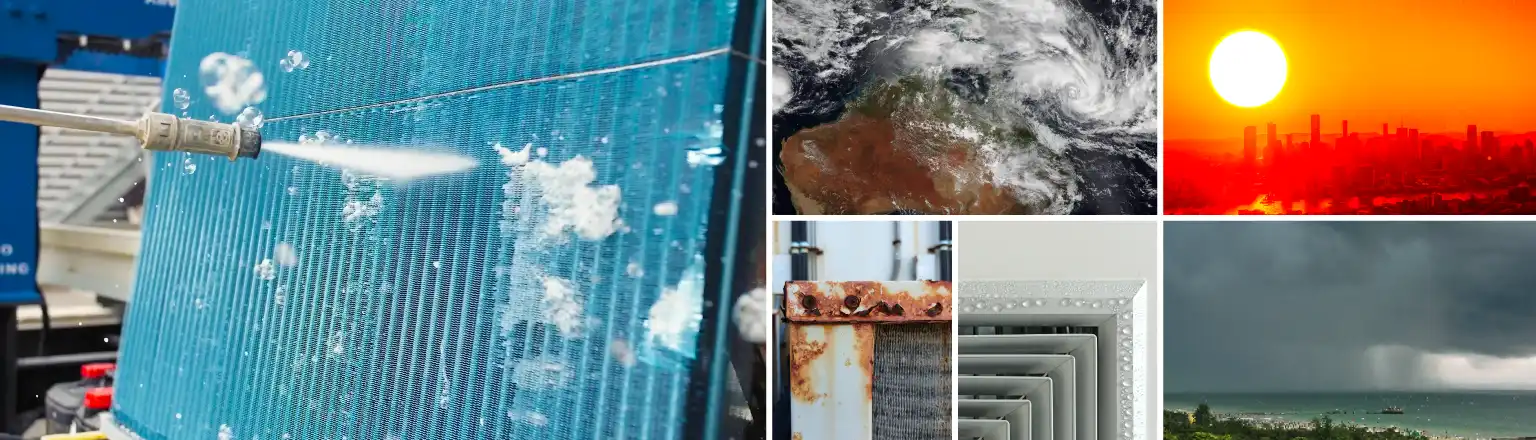

During January and February, commercial air conditioning systems in Queensland and Northern NSW operate under maximum load. Last summer (2025) served as a stark reminder of the volatile conditions our infrastructure must withstand, characterised by record-breaking heat and intense moisture:
🌡️ Extreme Heat: Temperatures soared to 47.5°C at Birdsville Airport on 12 February 2025 [1] —marking the hottest day in Queensland for the season and pushing compressors to their absolute limits.
🌧️ Heavy Rainfall: Atmospheric moisture peaked with 427.3 mm falling at K’Gari in just 24 hours [1] during the ex-Tropical Cyclone Alfred event, creating the high-humidity environment where biological growth and coil fouling thrive.
With these relentless heatwaves and heavy rainfall events putting maximum demand on HVAC systems, the margin for mechanical error is zero. Now is the perfect time to ensure your coils are professionally cleaned and your systems are optimised to handle the peak summer load efficiently.
🌡 Sustained high temperatures
💧 Elevated humidity
⚡ Volatile weather and frequent storm events
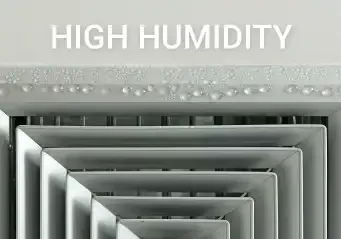


As cooling demand increases, evaporator and condenser coils work harder for longer, which makes any dirt, biofilm, or mould buildup far more problematic.
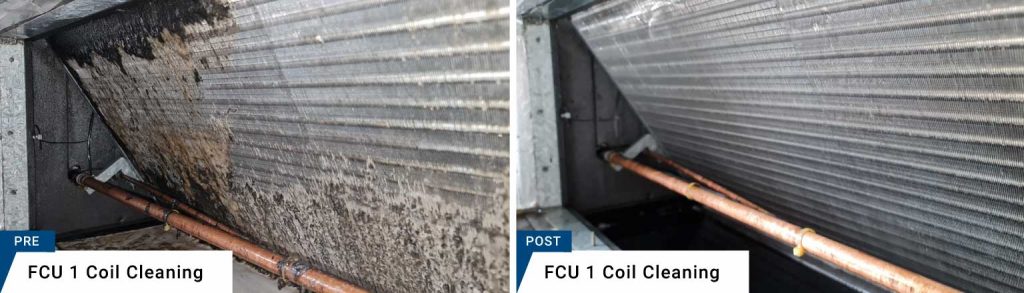
LEFT, before Cleaning: Lack of air flow, poor comfort conditions, poor energy efficiency. RIGHT, after treatment: Increased air flow, improved comfort conditions and improved energy efficiency
The impact of dirty coils during high-demand periods
When coils are contaminated during peak summer:
❄️ Heat transfer efficiency drops, forcing systems to run longer
⚡ Energy consumption increases
💦 Moisture retention rises, encouraging mould and microbial growth
🏢 Indoor air quality deteriorates, particularly in high-occupancy commercial spaces
🛠 Risk of breakdowns increases during the busiest time of the year

“Pick up the phone and schedule a clean before a breakdown or complaint. Fouled HVAC coils reduce heat transfer efficiency, increasing run time, energy use, and wear—especially in our hot, humid summer conditions. Getting ahead of it is simply smart maintenance.”
Muni Kumar, INDOOR AIR QUALITY EXPERT AT CLEAN-AIR

Why summer is a critical window for coil cleaning
High humidity causes coils to remain wet for longer periods, accelerating biological growth, trapping airborne contaminants, and reducing coil performance more rapidly than in cooler, drier months.
Regular professional coil cleaning helps:
Restore Cooling Capacity Dirty coils act as an insulator; even a thin layer of dust or biofilm can reduce heat transfer by up to 30%. Professional cleaning removes these barriers, allowing your system to reach its design specifications. By restoring the thermal exchange efficiency, you ensure the system can actually pull the heat out of your building and deliver the crisp, cool air required during a 35°C+ day.
Reduce System Strain When coils are fouled, the compressor has to work harder and run longer cycles to reach the thermostat setpoint. This leads to "compressor fatigue"—the primary cause of mid-summer electrical failures. Clean coils allow for a lower pressure drop across the heat exchanger, meaning the system draws less current, lowers your energy bills, and avoids the "weighted vest" effect that kills motors prematurely.
Improve Airflow and IAQ Clogged fins act as a trap for moisture, dust, and organic matter, creating a breeding ground for mould and bacteria. This not only chokes off airflow—forcing fans to ramp up and consume more power—but also contaminates the air your occupants breathe. Professional hygiene services (including multi-enzyme treatments) eliminate these microbial colonies, ensuring the air is both plentiful and healthy.
Protect Equipment During Peak Operational Demand Summer in Australia is the "stress test" for HVAC infrastructure. Systems already running at 90–100% capacity have no margin for error; if a coil is dirty, the system may trip on high-pressure faults or suffer a catastrophic breakdown just when you need it most. Proactive cleaning provides the operational headroom necessary to survive extreme heatwaves without emergency downtime or "hot calls" from occupants.
References
[1] Bureau of Meteorology (BOM) Bureau of Meteorology, Australian Government. Queensland Climate Summaries, Temperature Extremes and Rainfall Records (2025).
Data referenced includes: Highest temperature: 47.5 °C at Birdsville Airport, 12 February 2025 (https://www.bom.gov.au/climate/current/season/qld/archive/202502.summary.shtml) . Highest 24-hour rainfall: 427.3 mm at K’Gari (Fraser Island), 9 March 2025 (https://www.bom.gov.au/climate/rainfall/archive/20250310.archive.shtml) [2] NADCA (National Air Duct Cleaners Association)
NADCA. ACR Standard – Assessment, Cleaning, and Restoration of HVAC Systems.
Guidance on HVAC hygiene, coil contamination, microbial growth, and impacts on system efficiency and indoor air quality.
www.nadca.com [3] AIRAH (Australian Institute of Refrigeration, Air Conditioning and Heating)
AIRAH. Best Practice HVAC Hygiene & Indoor Air Quality Guidelines.
Guidance on maintenance of coils, condensate management, and HVAC performance in high-humidity climates. www.airah.org.au [4] ASHRAE (supporting reference – optional but credible) ASHRAE. Indoor Air Quality Guide & HVAC Systems and Equipment Handbook. Industry research on coil fouling, heat transfer efficiency, and moisture-related microbial risks. www.ashrae.org
Proactive coil cleaning during this period helps maintain heat transfer efficiency, reduce energy consumption, and limit microbial growth—especially in coastal and high-humidity environments.
If your systems are due for a summer coil clean, or you’d like to plan preventative maintenance to support performance through the hottest months, speak with your Clean-Air account manager to schedule works at a time that suits your site. Contact our Team now