
Welcome back to the Clean-Air Facts Series — your monthly source of concise, science-backed insights into the unseen forces shaping indoor environments.
In this second edition, we continue exploring how air quality affects health, comfort, and building performance. Over the past few weeks, we’ve looked at new angles — from how humidity and filtration influence microbial growth, to the role of ventilation in energy balance and occupant wellbeing.
Each fact highlights a different aspect of clean air — helping professionals across design, maintenance, and management make informed, practical decisions.
Let’s take a look at the next five Clean-Air Facts.

Fact 1 : Infants
Infants breathe in more pollutants per kilo of body weight than adults.
Their faster breathing rates and developing lungs make them more vulnerable to indoor air pollution.
SOURCE: World Health Organization (WHO) & UNICEF

👶🫁 Newborns and infants have faster respiratory rates and still-developing lungs—making them significantly more vulnerable to indoor air pollution.
In environments like hospitals, nurseries, and childcare centres, even low levels of pollutants like VOCs, fine particles, or microbial contaminants can have outsized effects on their health and development.
🧪 For infants in critical care settings, clean air isn't just ideal—it's essential.
We believe that everyone deserves healthy air—but especially the smallest and most vulnerable among us.

Fact 2 : Duct Leakage
Up to 30% of conditioned air is lost through duct leaks in commercial buildings.
That's wasted energy, uneven temperatures, and poor indoor air quality-before the air even reaches the room.
SOURCE: U.S. Department of Energy
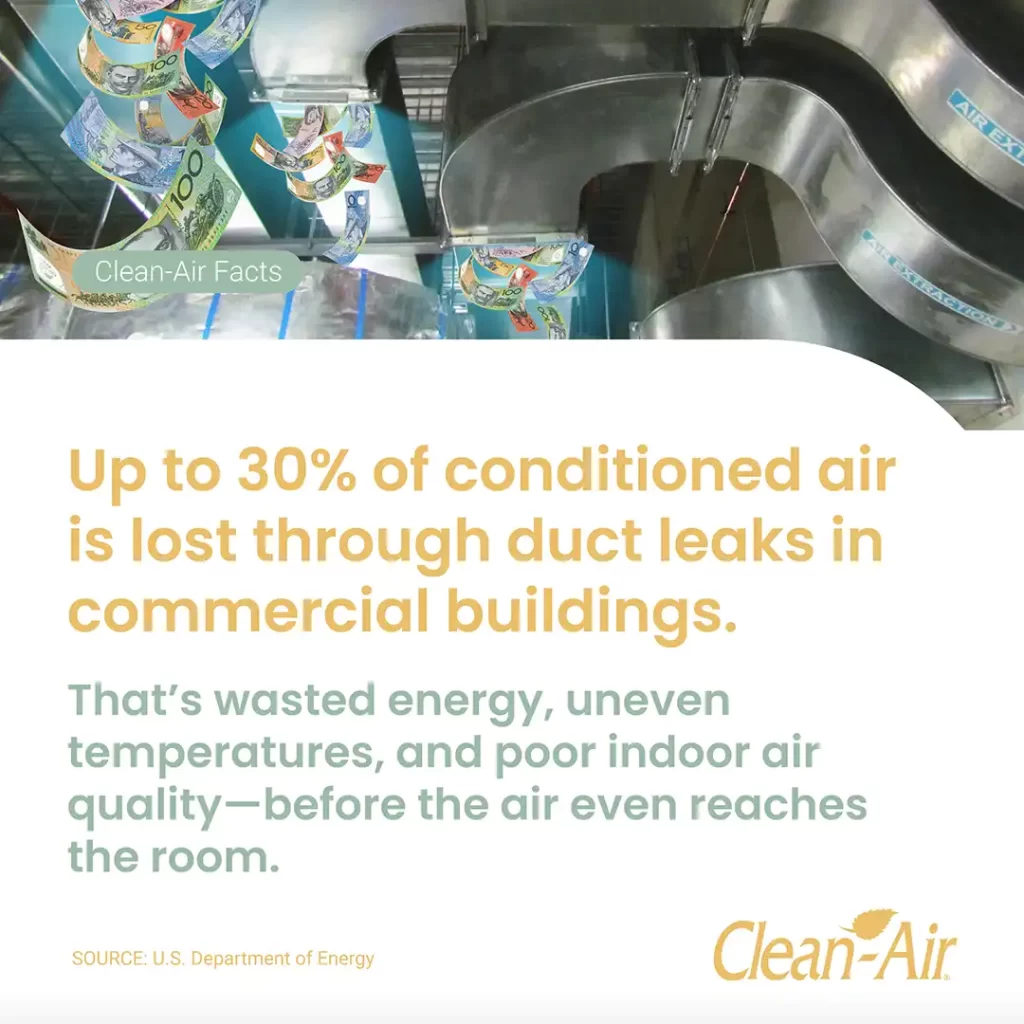
💸📈 Up to 30% of conditioned air is lost through duct leaks in commercial buildings.
Every cubic metre of air your system leaks is air you’ve already paid to heat or cool—but never reaches its destination. That means wasted energy, higher utility bills, and uneven comfort across the building.
In many offices, leaks go unnoticed for years because they’re hidden in ceilings or behind walls. But the impact is very real: higher operating costs, unnecessary strain on HVAC systems, and difficulty meeting ventilation standards.
✅ The good news? Technologies like Aeroseal duct sealing can recover that loss, improving efficiency and reducing operating costs—often with a payback period measured in months.
Clean ducts don’t just save energy—they support healthier, more comfortable spaces for everyone inside.

Fact 3 : Airborne Viruses
Airborne viruses can linger for hours in poorly ventilated spaces.
Ventilation and filtration aren't just comfort features-they're infection control tools.
SOURCE: CDC, ASHRAE Epidemic Task Force, ASHRAE Standard 241
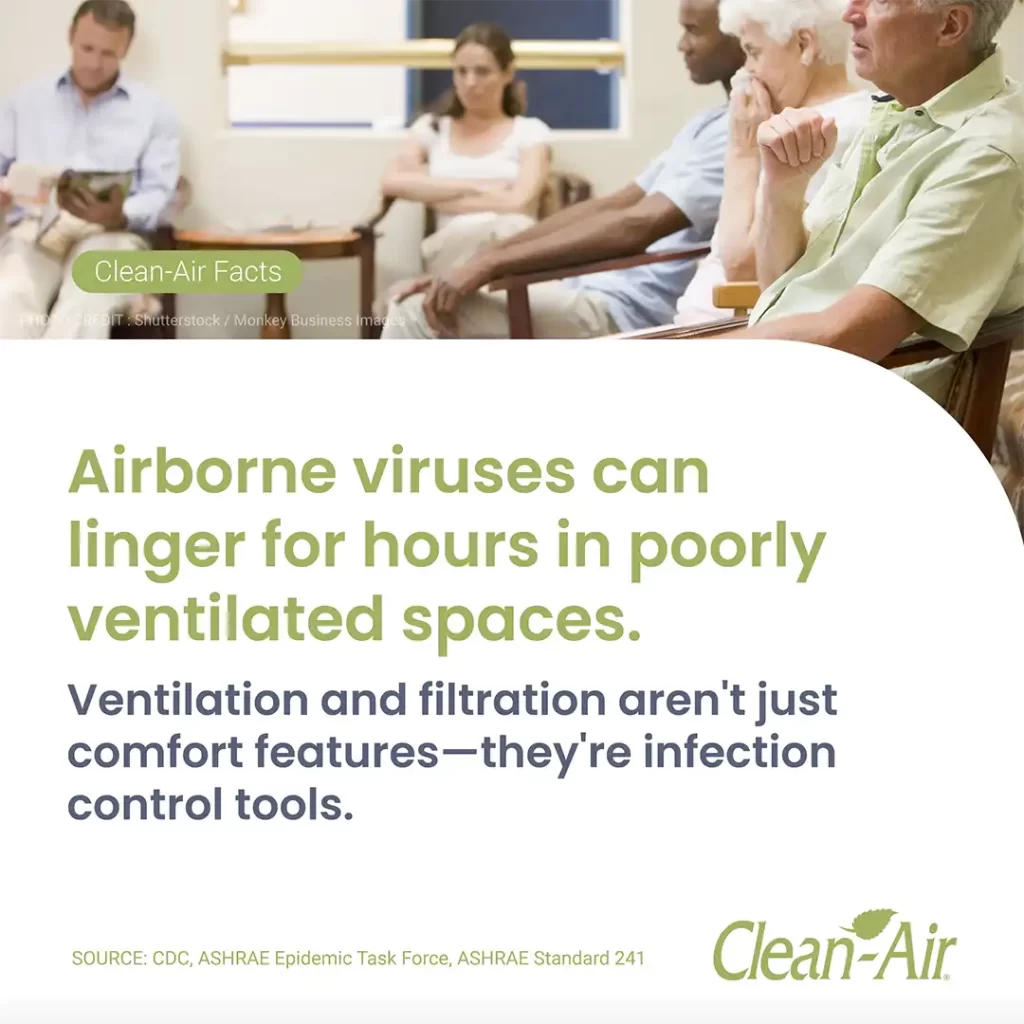
The CDC and the ASHRAE Epidemic Task Force emphasise that airborne transmission happens via infectious aerosols—tiny particles that can stay suspended in the air long after a cough, sneeze, or even normal conversation.
That’s why the new ASHRAE Standard 241 (“Control of Infectious Aerosols”) highlights the importance of enhanced ventilation, air cleaning, and filtration strategies in both new and existing buildings.
Better air circulation means fewer lingering pathogens, reduced infection risks, and healthier occupants. For offices, schools, healthcare, and public spaces, clean air isn’t optional—it’s a core part of safety and resilience. 🌍🏢

Fact 4 : Fibrosis
Mould exposure can scar the lungs
Certain mould spores release mycotoxins that, with long-term exposure, may cause permanent lung damage.
SOURCE: Lung Foundation Australia, CDC, Asthma Australia
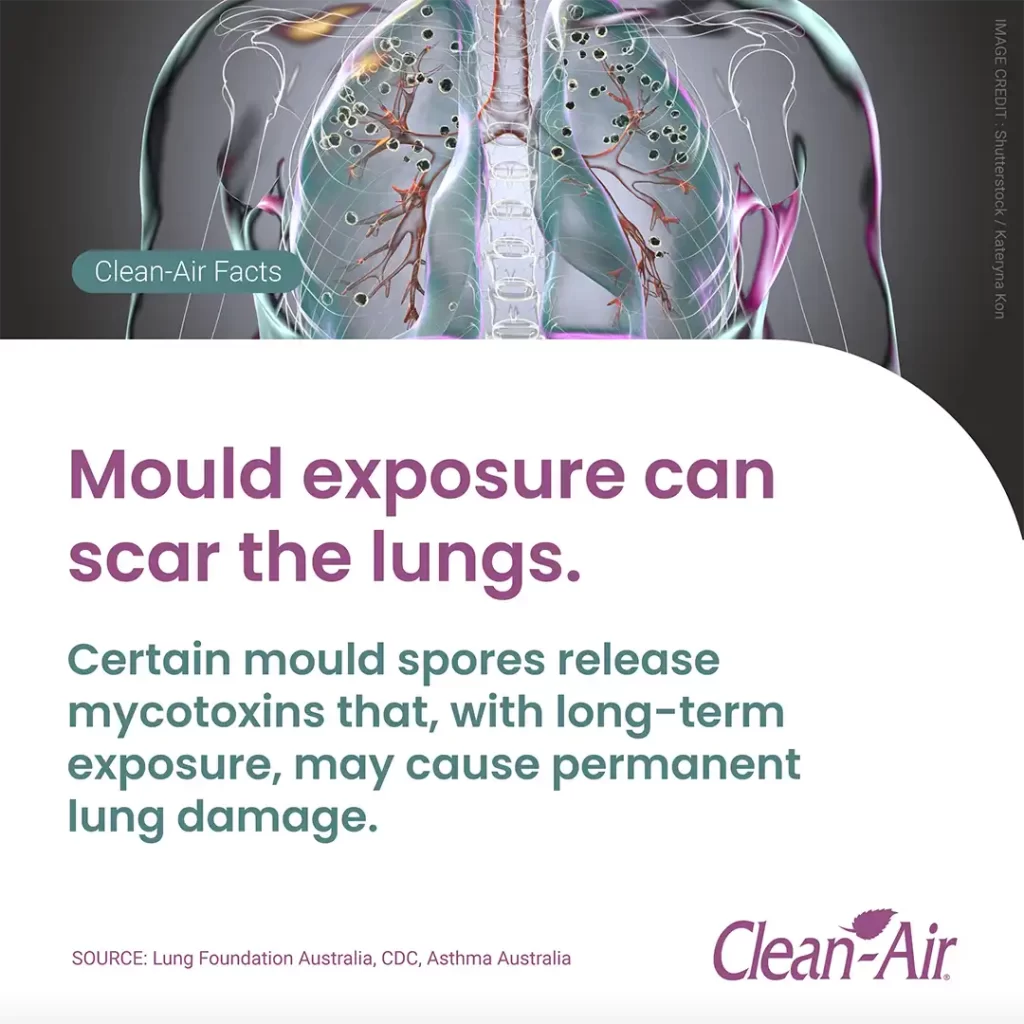
Certain mould spores don’t just cause allergies or asthma flare-ups—they can release mycotoxins that, with long-term exposure, may lead to permanent lung damage. In some cases, mould inhalation is linked to serious conditions such as Aspergillosis, a fungal infection that can scar lung tissue (fibrosis) and compromise breathing.
The Lung Foundation Australia, Centers for Disease Control and Prevention, and Asthma Australia all highlight mould as a critical but often overlooked threat to respiratory health. And because it grows silently in damp or hidden areas—like inside HVAC coils, ducts, and drip pans—it often goes undetected until symptoms appear.
Regular indoor air quality (IAQ) testing and HVAC inspections are key. They create a documented record of air conditions and ensure issues can be addressed early, before mould takes hold and affects building occupants.
Clean air isn’t just about comfort—it’s about protecting lung health for the long term.
See our 4 steps to Indoor Air Quality Success

Fact 5 : HVAC Neglect
Neglected HVAC systems are like a petri dish for pathogens.
Mould and bacteria thrive in dirty coils and ducts-then get blown through every room the system serves. If it's not cleaned, it's being breathed.
SOURCE: National Air Duct Cleaners Association (NADCA)
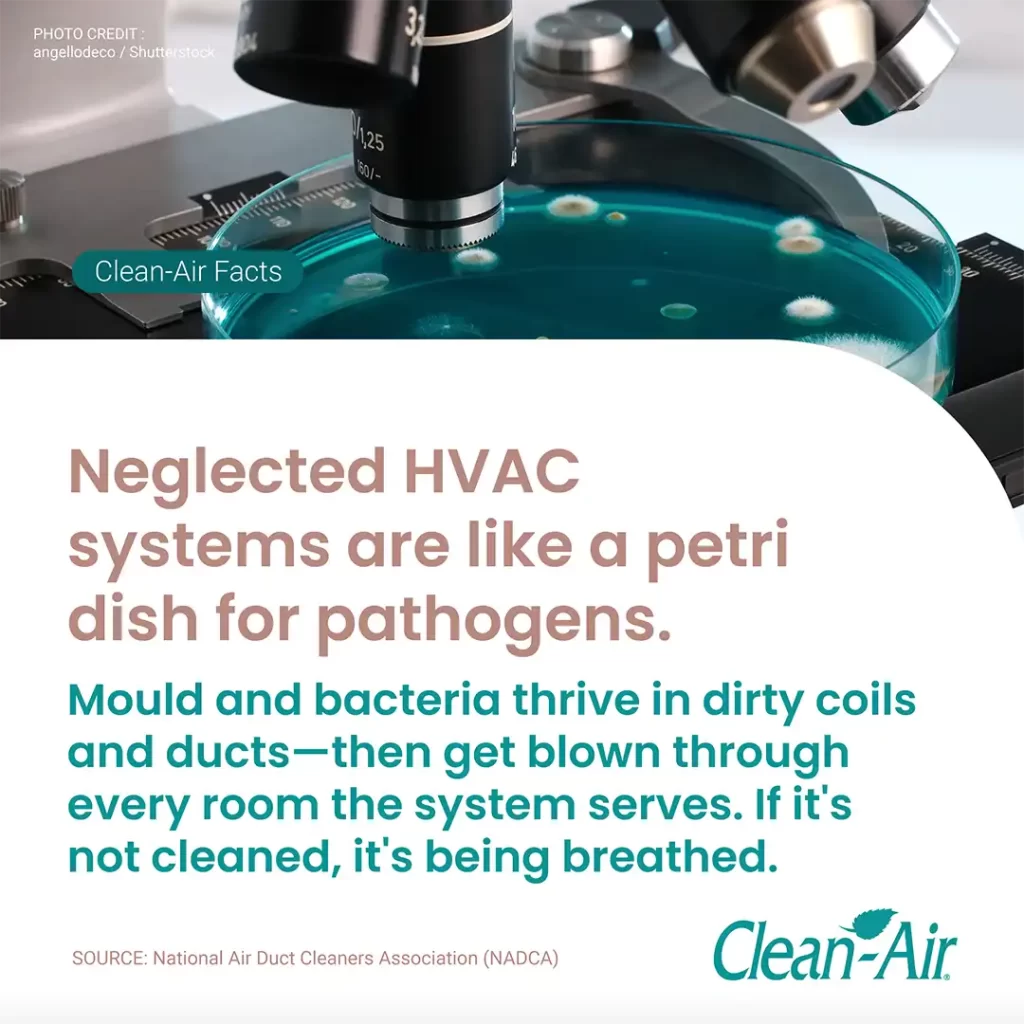
When dust, moisture, and warm temperatures combine inside HVAC coils and ductwork, they create ideal conditions for mould, bacteria, and biofilm to flourish.
Once established, these microbial contaminants don’t stay put—they get distributed through the airstream and into every room the system serves. That means every breath could carry more than just oxygen.
📉 The result? Compromised air quality, increased allergy and asthma symptoms, and a higher risk of "sick building syndrome"—especially in offices, schools, and healthcare environments.
🧰 Routine HVAC hygiene—coil cleaning, duct inspections, and microbial treatments—is one of the simplest ways to protect the health of your building and the people in it.
We hope you’ve enjoyed this second round of Clean-Air Facts! Each one highlights how air quality affects our health, comfort, and the performance of HVAC systems — often in ways that go unnoticed.
Follow our LinkedIn page to catch the next fact in the series each week.

Got questions or concerns? Our team at Clean-Air specialises in HVAC hygiene, system assessments, and remediation — especially around CO₂ management, indoor pollutants, SBS risks, corrosion, and more.