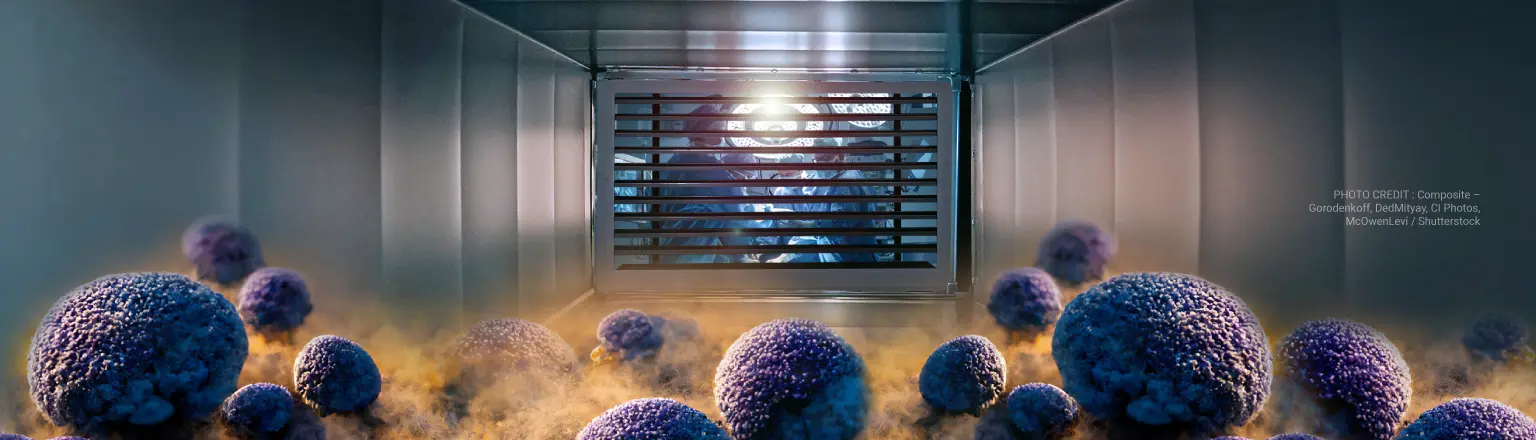

The recent tragedies at Royal Prince Alfred (RPA) and The Children’s Hospital at Westmead (late 2025–early 2026) have sent a shockwave through the Australian healthcare sector.
Four lives were lost to hospital-acquired (nosocomial) Aspergillus fungal infections. While the "trigger" is often nearby construction or redevelopment work, the delivery mechanism is almost always the same: The HVAC system.
For a healthy person, Aspergillus spores are everywhere and usually harmless. But for organ transplant recipients and immunocompromised patients, they are a "silent killer."

“Clean-Air has advocated for a maintenance-first approach for decades. It’s time critical facilities move past 'break-fix' thinking. By treating ventilation as a clinical shield rather than just 'comfort,' we can stop spores like Aspergillus from ever reaching patient zones.”
Muni Kumar, INDOOR AIR QUALITY EXPERT AT CLEAN-AIR

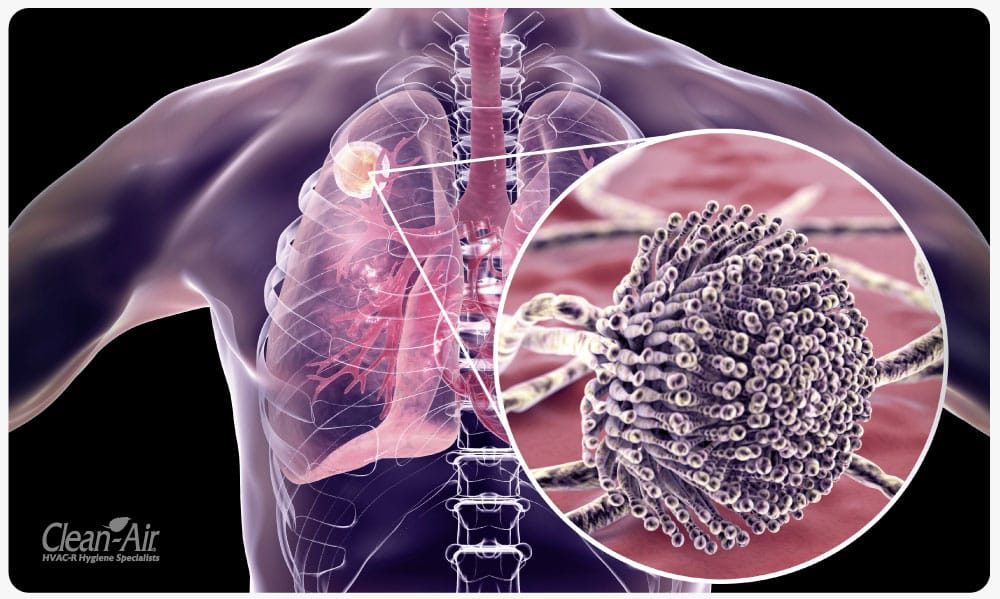
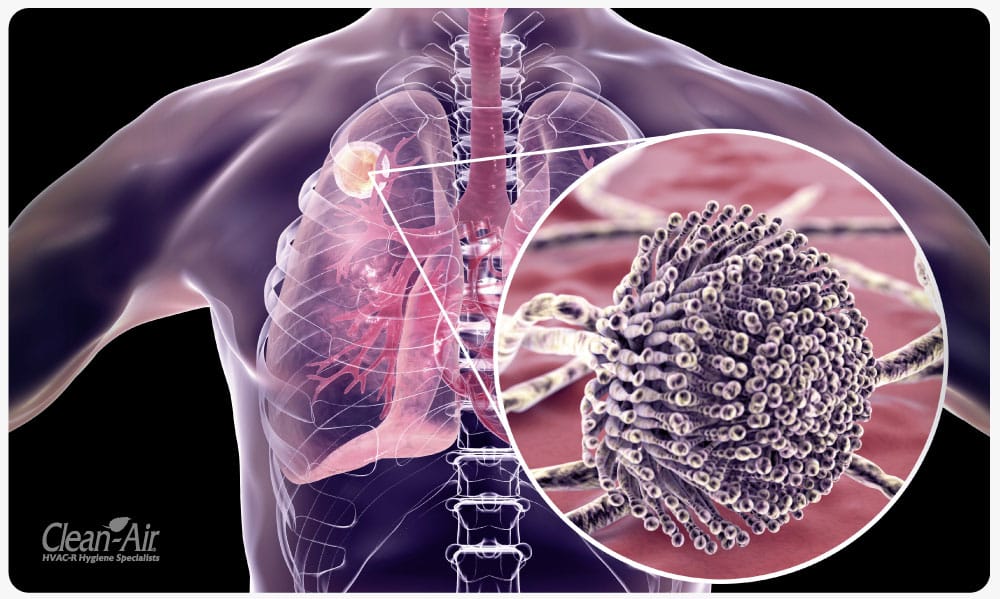
ABOVE Because Aspergillus is angioinvasive (blood-vessel invading), the mortality rate for invasive aspergillosis in transplant patients can exceed 50%.When an HVAC system harbors Aspergillus spores and distributes them into the breathing space, it isn't just "dirty air"—it is the mechanical delivery of a biological pathogen directly into the most vulnerable part of a patient's anatomy.
Why the HVAC system is the critical failure point:
The Reservoir Effect: Dust and organic debris on grilles and registers act as a host. If moisture or humidity spikes, these areas become breeding grounds for spores that are eventually released into the air stream.
Airflow Instability: Maintenance neglect leads to pressure imbalances. Sudden changes in fan speed or system cycling can dislodge concentrated pockets of contaminated dust, sending them directly into sterile patient zones.
Ductwork Leakage: Standard filters cannot protect a ward if the ductwork itself is compromised. Small leaks allow unfiltered, spore-heavy construction dust to bypass filtration entirely. This is why many facilities are now using Aeroseal to seal ductwork from the inside, ensuring air only enters patient rooms through purified routes.
"It's the Aspergillus fungus that's potentially raised as the source of that cluster of infections... Two of those patients subsequently dying..." — ABC News Australia
Watch: ABC NEWS
NSW Health investigate deadly fungal infection at Sydney’s Royal Prince Alfred Hospital
ABC News: Has detailed the investigation into Royal Prince Alfred (RPA), noting that health authorities are linking the fatal cluster to Aspergillus spores likely stirred up by massive on-site hospital redevelopments.

“a reminder of how critical HVAC hygiene is in clinical environments.
In healthcare settings, airborne fungal spores such as Aspergillus are not just an IAQ issue, they are an infection control issue.
Standards-based HVAC hygiene is not simply maintenance, it should form part of the clinical risk management framework.
When systems are neglected, unfortunately, the consequences can extend far beyond comfort or efficiency.”
Dave Muldoon, INDOOR AIR QUALITY EXPERT AT CLEAN-AIR
Watch: 7News Investigates the Sydney Outbreak
The severity of this issue was recently highlighted by 7News Australia, which uncovered "shocking new details about two more deaths in a Sydney hospital linked to mould."
Unlike previous cases centred on adult transplant wards, this latest report reveals that the tragedy has extended to the most vulnerable: children. You can watch the report on the 7News YouTube Channel, which details how these children were exposed and the questions now being asked of hospital facility management across the country.
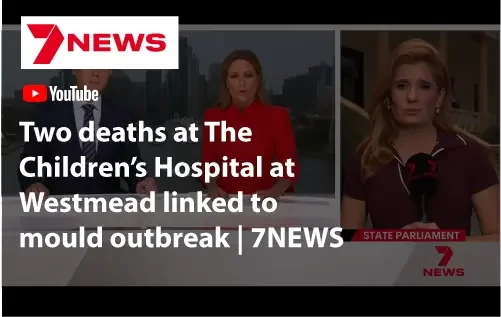
"Two more deaths in a Sydney hospital linked to mould. This time the patients were vulnerable children..." — 7News Australia
Following the NSW Health Snap Review (March 2026), the industry is moving toward the Queensland Health Guidelines (Updated May 2025) as the gold standard for managing HVAC risks in clinical settings.
We must treat every duct, grille, and register as a critical clinical barrier. Because when that barrier fails, the cost isn't just a repair bill—it’s a life.
References / Further Reading
Case Studies & Incident Reports: Royal Prince Alfred (RPA) & The Children's Hospital at Westmead (2025–2026): "Fungal infection cluster at Royal Prince Alfred Hospital linked to environmental contamination." ABC News / The Conversation (February 2026). | Seattle Children's Hospital (2001–2019): Investigation into 14 cases of Aspergillus linked to air filtration and maintenance failures. Public Health Seattle & King County. | Birmingham Children's Hospital (2014): Fatality linked to Aspergillus following exposure to construction dust. Clinical Case Report. | Roswell Park Memorial Institute (1982–1983): Ten-patient fatality cluster caused by outdated and contaminated filtration systems. American Journal of Medicine.
Technical & Clinical Reviews: Mechanism of Nosocomial Transmission: Mareković, I. (2023). "What’s New in Prevention of Invasive Fungal Diseases during Hospital Construction." Journal of Fungi / NIH. | HVAC as a Reservoir: Spagnolo, A.M. (2025). "Aspergillus Contamination in Healthcare Facilities: The Role of Air Conditioning Systems." MDPI / Journal of Environmental Research. | Particle Dynamics: WTI Pure Air Control Services (2021). "Air dispersal of Aspergillus spores (3-5µm) and deep lung penetration." | Ductwork Risks: Life Safety Services (2020). "The hidden dangers of hospital ductwork: Breeding grounds for pathogens."
Guidelines & Prevention Standards : Queensland Health (Updated May 2025): Air Quality Management in Healthcare Facilities. [National Gold Standard for Clinical HVAC]. | CDC (Centers for Disease Control and Prevention): Guidelines for Environmental Infection Control in Health-Care Facilities. Recommendations for HVAC maintenance and construction dust mitigation. | National Guidelines for Prevention of Nosocomial Invasive Aspergillosis: HPSC (Health Protection Surveillance Centre). Focus on HEPA filtration and pressure differentials. | NSW Health (March 2026): Snap Review: HVAC Integrity and Clinical Zone Safety Protocols.