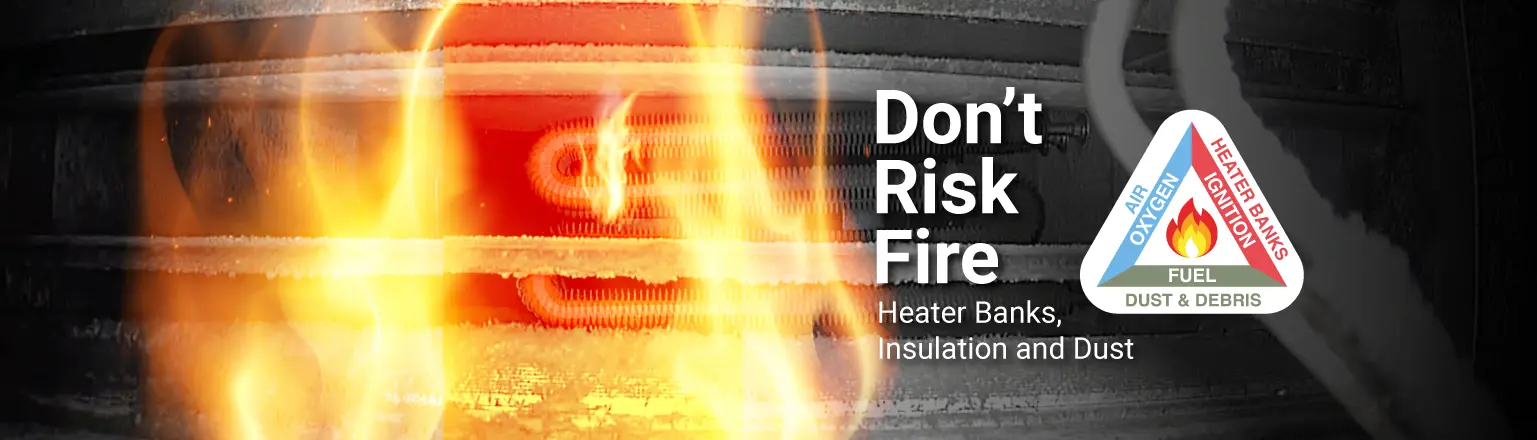

As we transition out of peak summer, many HVAC systems will soon engage their heater banks for the first time in months. This poses a significant, often overlooked fire risk. Over the humid summer, internal duct insulation can degrade, lose its adhesive, and sag directly onto the heating elements. When these banks finally energise, any trapped debris or loose insulation can ignite instantly. A proactive hygiene inspection is no longer just about air quality—it is a critical fire-prevention measure to ensure your thermal components are clear, secured, and safe to operate.

“In Queensland, heater banks can sit idle for 10 months of the year, becoming dust traps or catching sagging insulation, only to become a fire hazard the moment a "cool" night finally triggers them..”
Muni Kumar, INDOOR AIR QUALITY EXPERT AT CLEAN-AIR

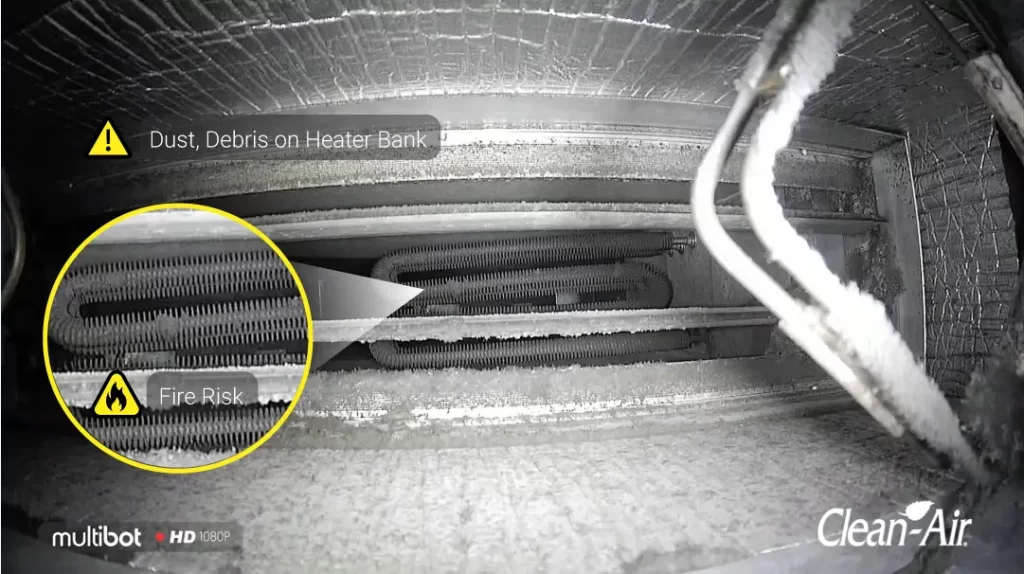
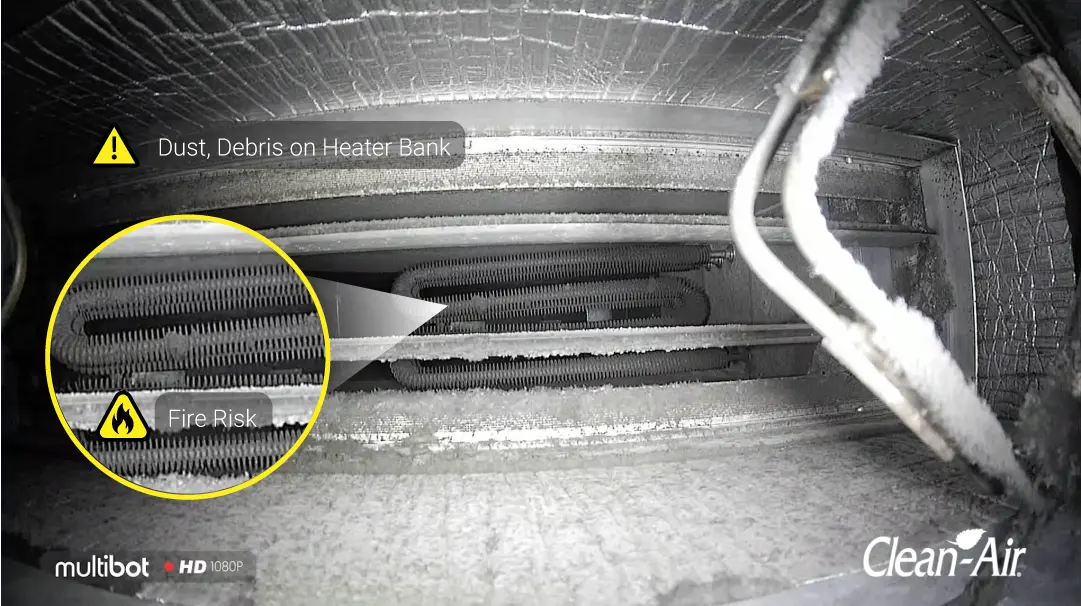
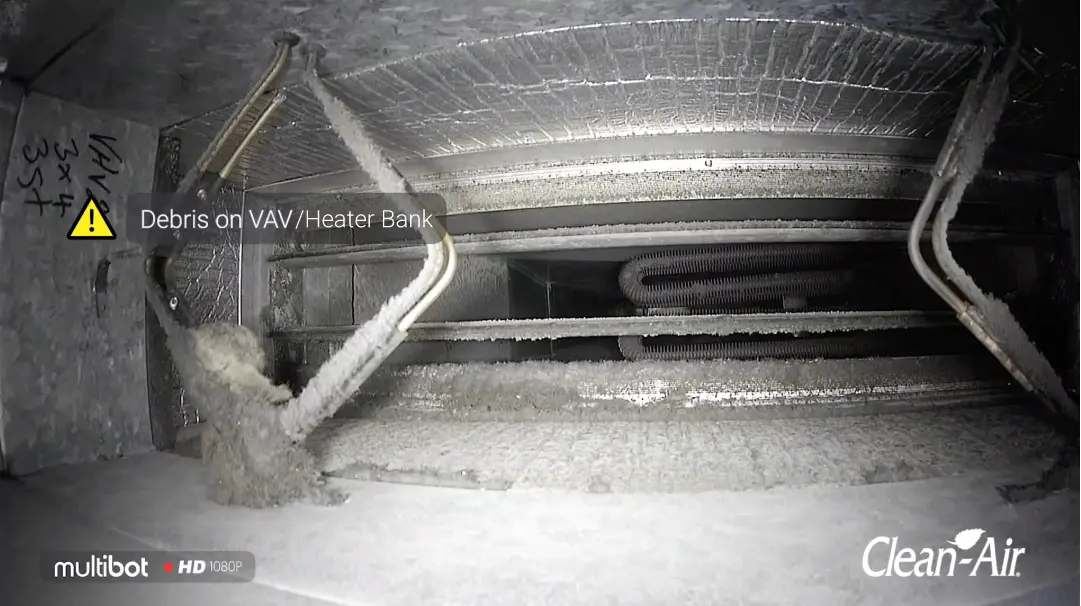
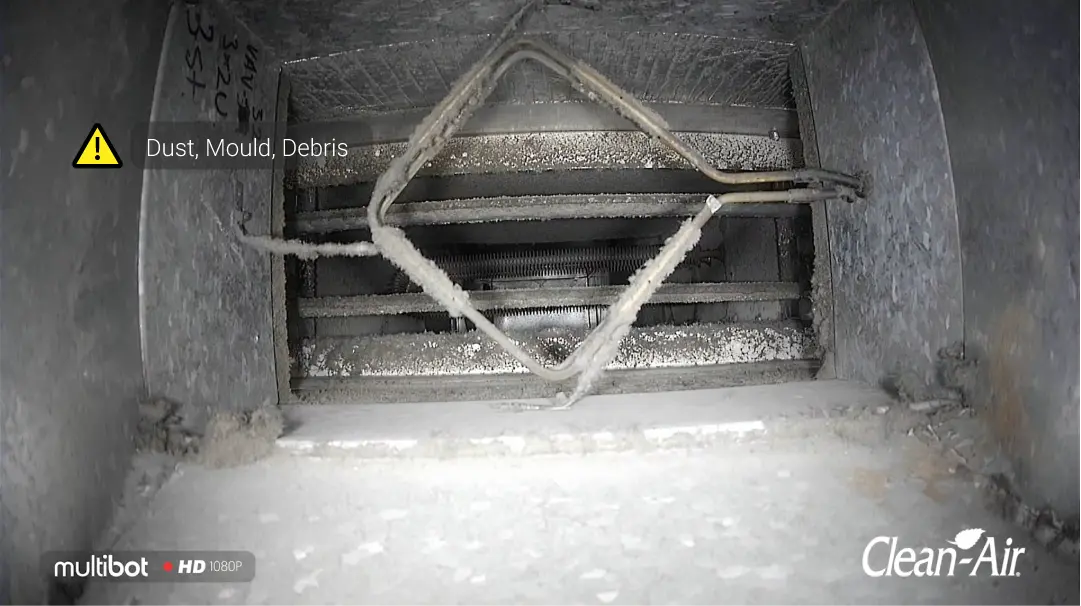
ABOVE Dust, Debris build-up: Accumulation of dust, debris on, in and around heater banks poses a significant fire risk.
Credit: Clean-Air Photo Archive © 2025 Mulitbot Video Still
The Risk of Ignition: Dust, Foam, and Facings
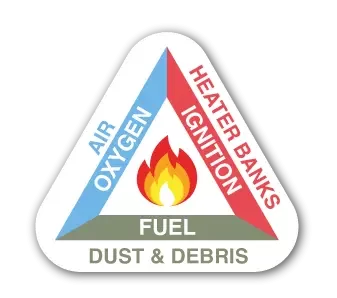
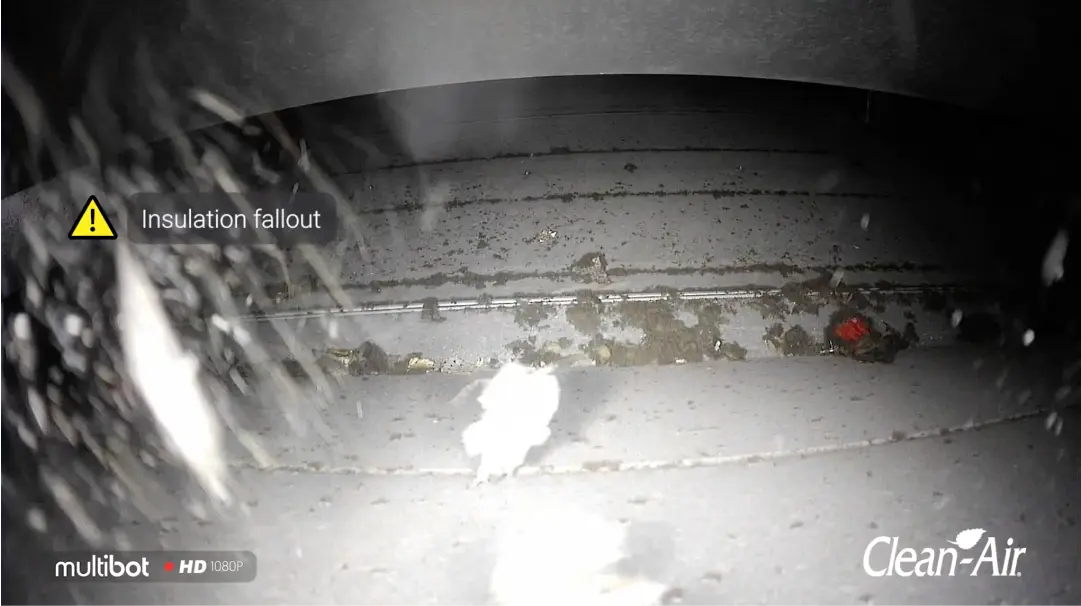
The danger lies in the combination of combustible materials and high-intensity heat. While the core of many insulation types is fire-resistant, the real threat comes from contamination and facings. Over months of inactivity, layers of lint and dust settle directly onto the heater banks and surrounding insulation, creating a highly flammable "tinder" that can ignite at temperatures as low as 370°C.
Furthermore, many older Queensland installations utilise foam-based insulation or fibreglass with foil/paper backings. If the insulation has degraded or was improperly installed too close to the heating source, these backings act as a fuel source. Using non-combustible alternatives like Mineral Wool or Fire-Rated specialised wraps is essential, but the first line of defence is a professional hygiene audit to clear out dust accumulation and ensure no sagging materials are in direct contact with heat-producing components.
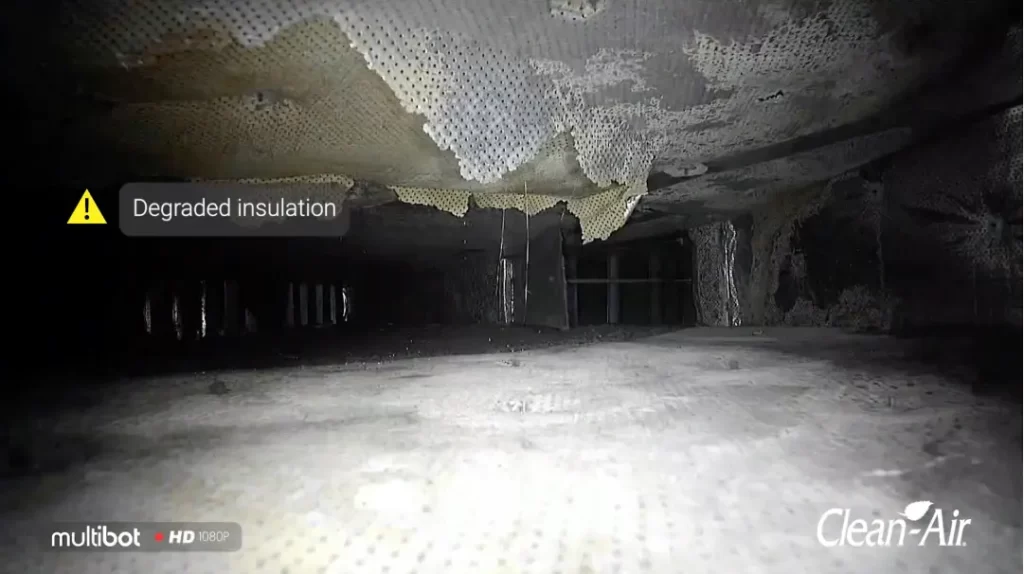
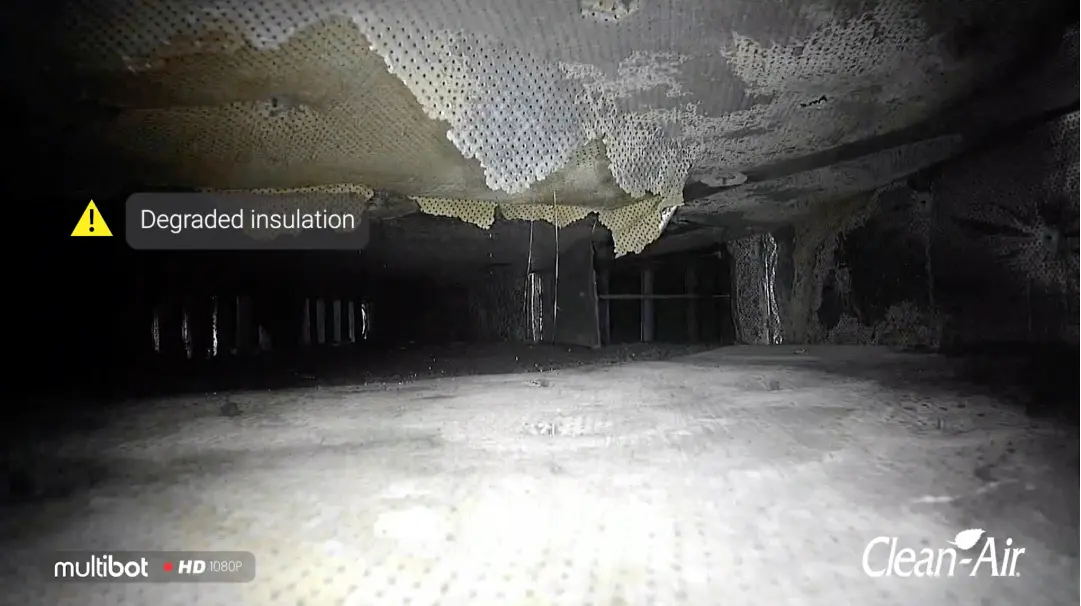
ABOVE Insulation Damage: Persistent humidity over the summer months causes internal adhesives to degrade and fail, resulting in sagging and torn insulation that poses a significant fire risk should it come into contact with heater banks.
Credit: Clean-Air Photo Archive © 2025 Mulitbot Video Still
Summary of Key Fire Risks:
- Contamination: Accumulated lint and dust acting as an ignition primer.
- Combustible Facings: Paper or foil backings that provide fuel once a spark occurs.
- Degradation: High summer humidity causing adhesives to fail, leading to sagging insulation.
- Improper Clearance: Insulation packed too tightly or shifted into direct contact with heater elements.
Don’t Take the Risk: Ensure Your Compliance
Inline with AS 3666, facility managers have a clear responsibility to maintain HVAC systems in a manner that prevents safety hazards and ensures healthy indoor air. Ignoring the internal condition of your ductwork doesn't just risk a system failure—it risks a fire.
At Clean-Air, we provide comprehensive HVAC Health Checks tailored to the complexities of your building. Because much of the danger is hidden behind bulkheads or deep within the ceiling grid, we offer a range of advanced inspection methods to ensure no heater bank or sagging insulation goes unnoticed:
- Visual & Photographic Audits: Detailed reporting and high-resolution imagery of critical components.
- MultiBot Robotic Inspections: Our specialised robots can navigate long lengths of inaccessible ducting and hard-to-reach areas that traditional manual inspections simply cannot access. See How Multibot Makes Duct Inspections Faster, Safer and More Accurate
- IAQ Hygiene Verification: Ensuring your system is as clean as it is safe.
Don’t wait for the first cool night to test your system's safety. Book your HVAC Health Check with your account manager today and ensure your facility is protected for the season ahead.
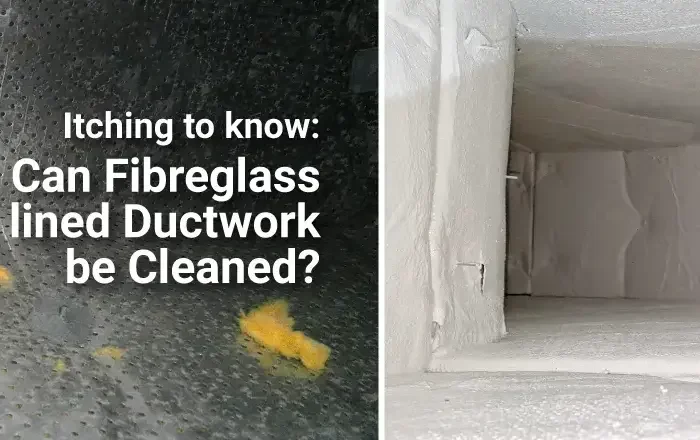
Related: Can Fibreglass-lined Ductwork be Cleaned?
Over time, factors like air turbulence, fluctuating temperatures, and humidity can degrade the fibreglass lining.
Related: HVAC System Restoration After a Fire
a critical yet often overlooked concern is the impact on the HVAC system, which can suffer from soot contamination