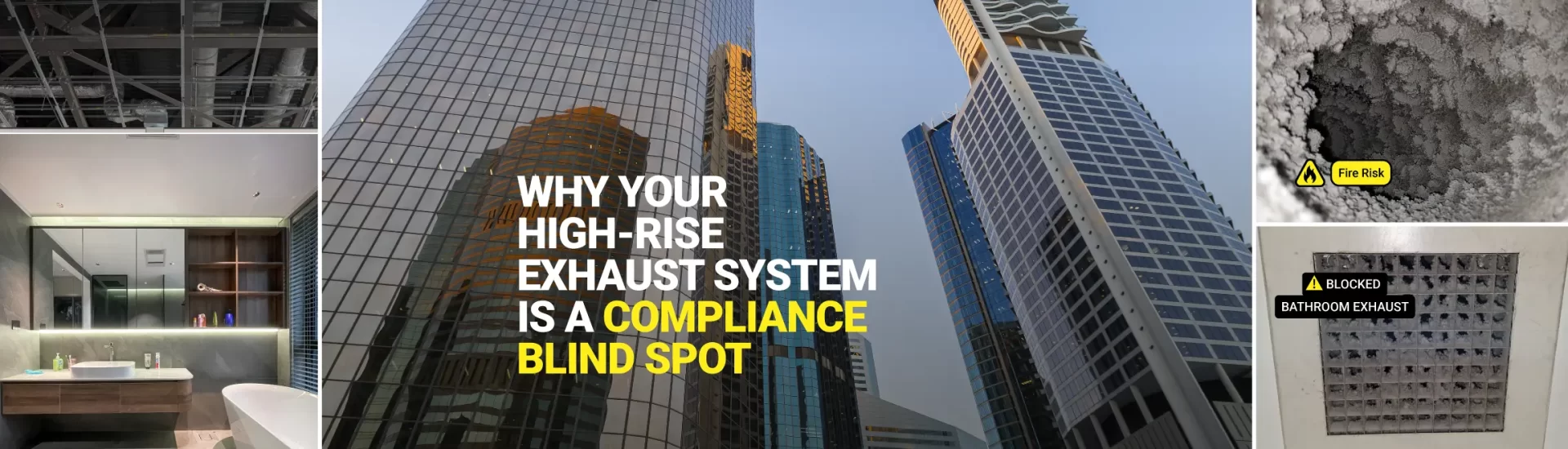

You’ve seen the glossy brochures: floor-to-ceiling glass, marble finishes, and the promise of "worry-free" luxury living. But in the world of Australian high-rise residential apartment buildings and commercial hotels, the most dangerous risks are the ones your residents and guests never see.
While fire doors and sprinklers get the glory of annual inspections, a silent hazard is hiding behind the vents of every bathroom and laundry cupboard.
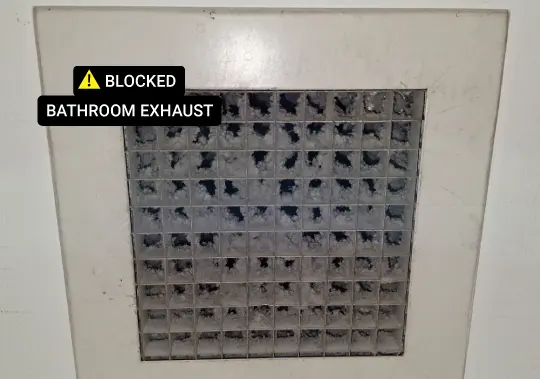
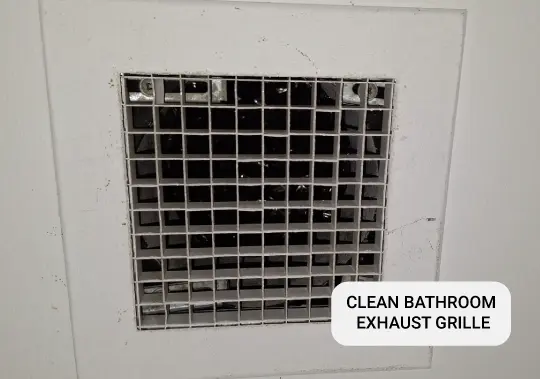
ABOVE, Bathroom Exhaust –Pre and Post Cleaning. (Left) Almost total blockage, reducing extraction efficiency. (Right) Restored to AS 1851:2012 compliance standards following debris removal and cleaning, ensuring optimal airflow and fire safety. Credit: Clean-Air Archive © 2026
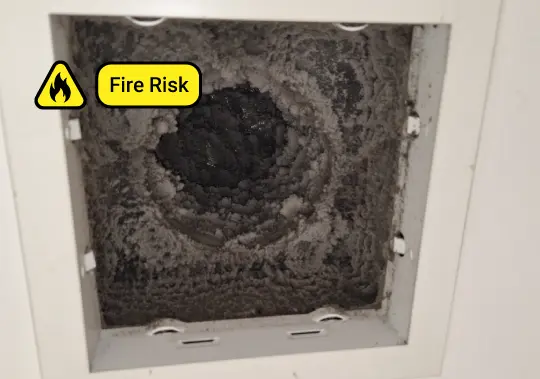
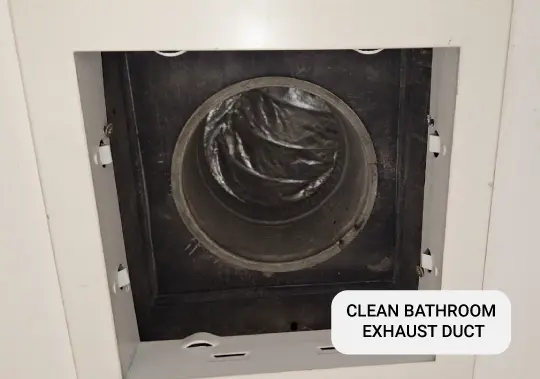
ABOVE, Bathroom Exhaust Duct –Pre and Post Cleaning. (Left) Heavy accumulation of combustible lint a significant fire risk and reducing extraction efficiency. (Right) Restored to AS 1851:2012 compliance standards following debris removal and cleaning, ensuring optimal airflow and fire safety. Credit: Clean-Air Archive © 2026
The Invisible Hazard: Lint, Dust, and Damp
In a high-occupancy building, the toilet and laundry exhaust systems are mechanical ventilation structures designed to extract stale, contaminated air, unpleasant odours, and excess moisture from confined spaces. However, over time, these ducts become clogged with a flammable mix of:

Secondary Lint: Even with lint filters, micro-fibers bypass dryers and settle in the ductwork.

Organic Build-up: Moisture from showers combines with dust to create a sticky residue that can harbor mould and bacteria.

Mechanical Fatigue: When ducts are restricted, fans work harder, overheat, and eventually fail—often sparking the very debris they are trying to clear.
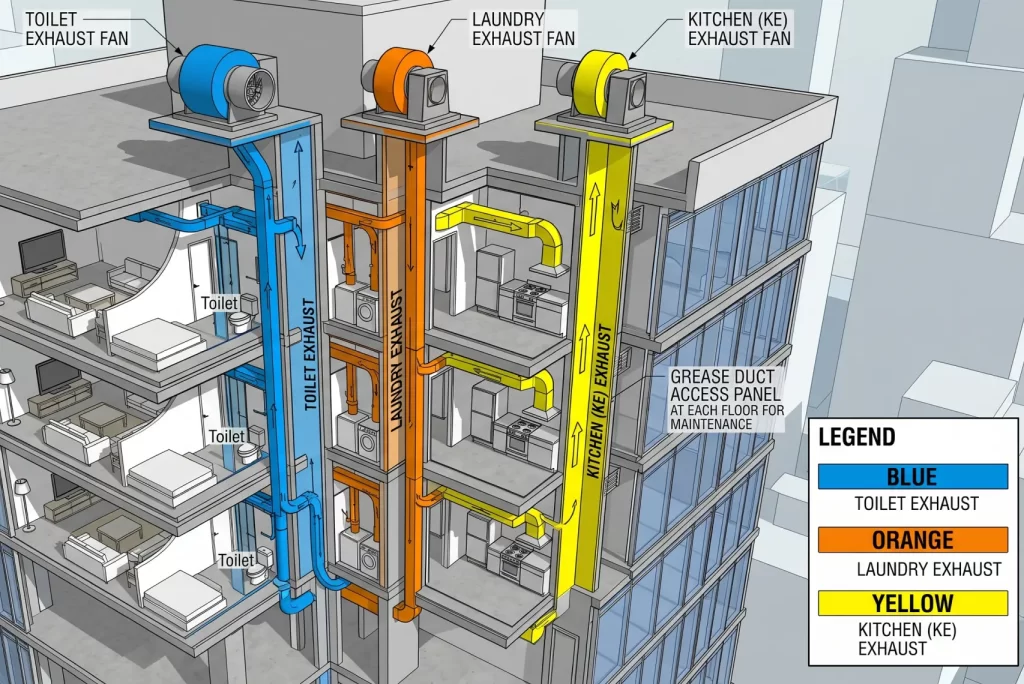
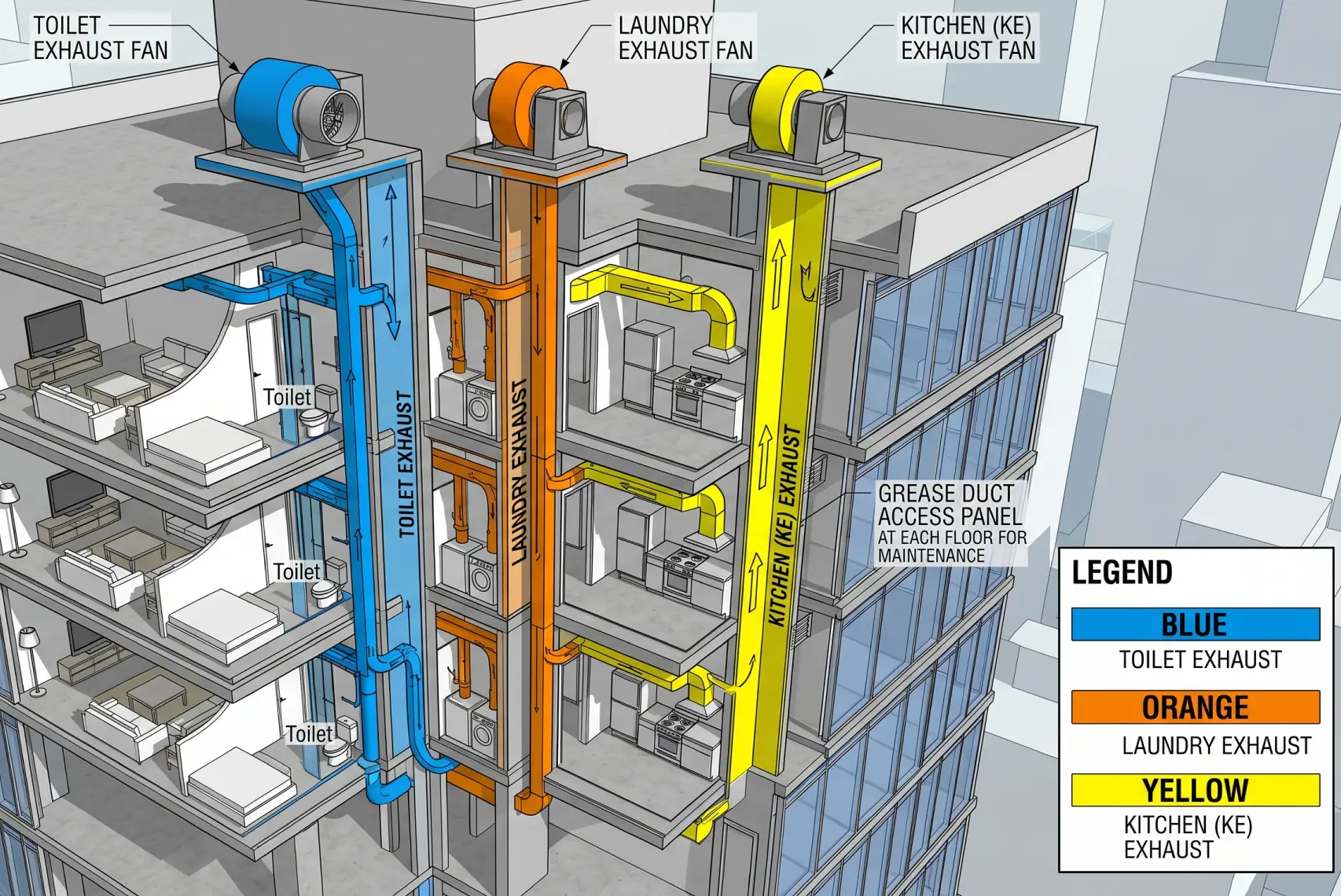
ABOVE, High-Rise Exhaust Systems: Kitchen, Toilet, and Laundry. This AI-generated visualisation is for illustrative purposes only. While not technically accurate, it highlights the basic layout and complexity of high-rise exhaust systems. Source: Gemini Pro
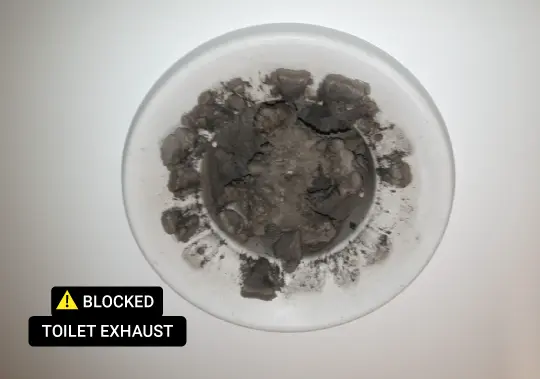
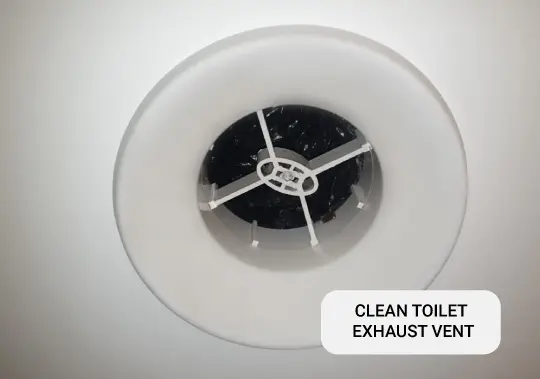
ABOVE, Toilet Exhaust, face side with diffuser plate removed –Pre and Post Cleaning. (Left) Almost total blockage, reducing extraction efficiency. (Right) Restored to AS 1851:2012 compliance standards following debris removal and cleaning, ensuring optimal airflow and fire safety. Credit: Clean-Air Archive © 2026
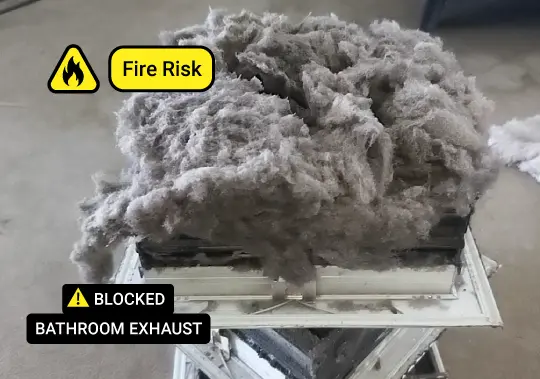
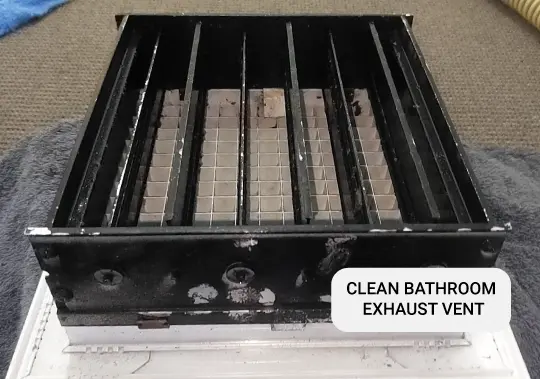
ABOVE, Bathroom Exhaust Grille –Pre and Post Cleaning. (Left) Heavy accumulation of combustible lint a significant fire risk and reducing extraction efficiency. (Right) Restored to AS 1851:2012 compliance standards following debris removal and cleaning, ensuring optimal airflow and fire safety. Credit: Clean-Air Archive © 2026
The Reality of Australian Compliance
Facility Managers and Body Corporates have a lot to manage, and because mechanical ventilation systems operate behind the scenes, their role in fire safety can sometimes be underestimated. Keeping up with strict AS 1851 requirements for these systems is a complex task, but it's essential for preventing the spread of fire."
The Compliance Gap: If a fire starts in a laundry dryer—a leading cause of residential fires—and the exhaust duct is lined with lint, that duct becomes a horizontal chimney, carrying flames rapidly through wall cavities to other apartments or floors.
If you haven’t had your vertical risers and horizontal laterals inspected and cleaned, you aren't just risking a breakdown; you are risking insurance non-disclosure and a massive liability suit should the unthinkable happen.
Three Signs Your Building is at Risk
If you are managing a commercial hotel or a high-rise strata, watch for these "red flags":

1. The "Damp" Smell: Musty odours in bathrooms often mean the exhaust is no longer pulling air effectively.

2. Extended Drying Times: When residents complain that dryers take two cycles to dry a load, the exhaust path is likely restricted.

3. Visible Dust on Grilles: If you see "fur" on the outside of the vent, the inside of the duct is almost certainly choked.
Protection Through Prevention
Ensuring your building meets Australian standards isn't just about ticking a box—it’s about protecting your asset and the lives within it. Professional hygiene and compliance specialists use robotic cameras to inspect these hidden networks, providing a digital audit trail that keeps insurers happy and residents safe.
Don't wait for a "Code Red" to check your vents. Are you confident that your building’s unseen hazards are accounted for in your current maintenance schedule?
To safeguard the properties you manage and maintain AS 1851 compliance, rely on Clean-Air's expertise in high-rise exhaust system cleaning. Armed with specialist equipment and extensive experience, we provide steadfast solutions that eliminate hidden fire hazards and keep your ventilation systems efficient. Contact Clean-Air today to discuss how we can assist you in protecting your building and ensuring a healthy indoor environment. Get in touch here